

The delivery driver held the door a second too long. The window was open just a crack. It was moving day and everything was chaos. And now your indoor cat, who has never been outside, is out there somewhere. Most owners never think it will happen to them. Being ready takes ten minutes.
In this article
How indoor cats get out · Five steps to be ready · Why the first hours matter · A collar that holds an AirTag
The problem
How indoor cats get out
01
An open door
Deliveries, guests, kids running in and out.
02
Windows and balconies
A gap is all a curious cat needs.
03
Moving day
New smells, open doors and stress are a risky mix.
04
Travel and vet visits
A carrier that pops open in the parking lot.
What helps
Five steps to be ready
Microchip and keep details up to date. Check your phone number is current with the chip registry.
Take clear photos now. Front, side and any markings, ready to share.
Know their hiding instinct. Most escaped indoor cats hide nearby, quietly, close to home.
Cat-proof the risky moments. Close the cat in a room during deliveries, parties and moves.
Give them a way to be found. A collar that carries a tracker gives you somewhere to start.
Why the first hours matter
A frightened indoor cat usually hides within a few houses of home and stays silent. Knowing where they were last seen turns a frantic search of the whole neighborhood into a focused one.
The setup
A collar that holds your AirTag
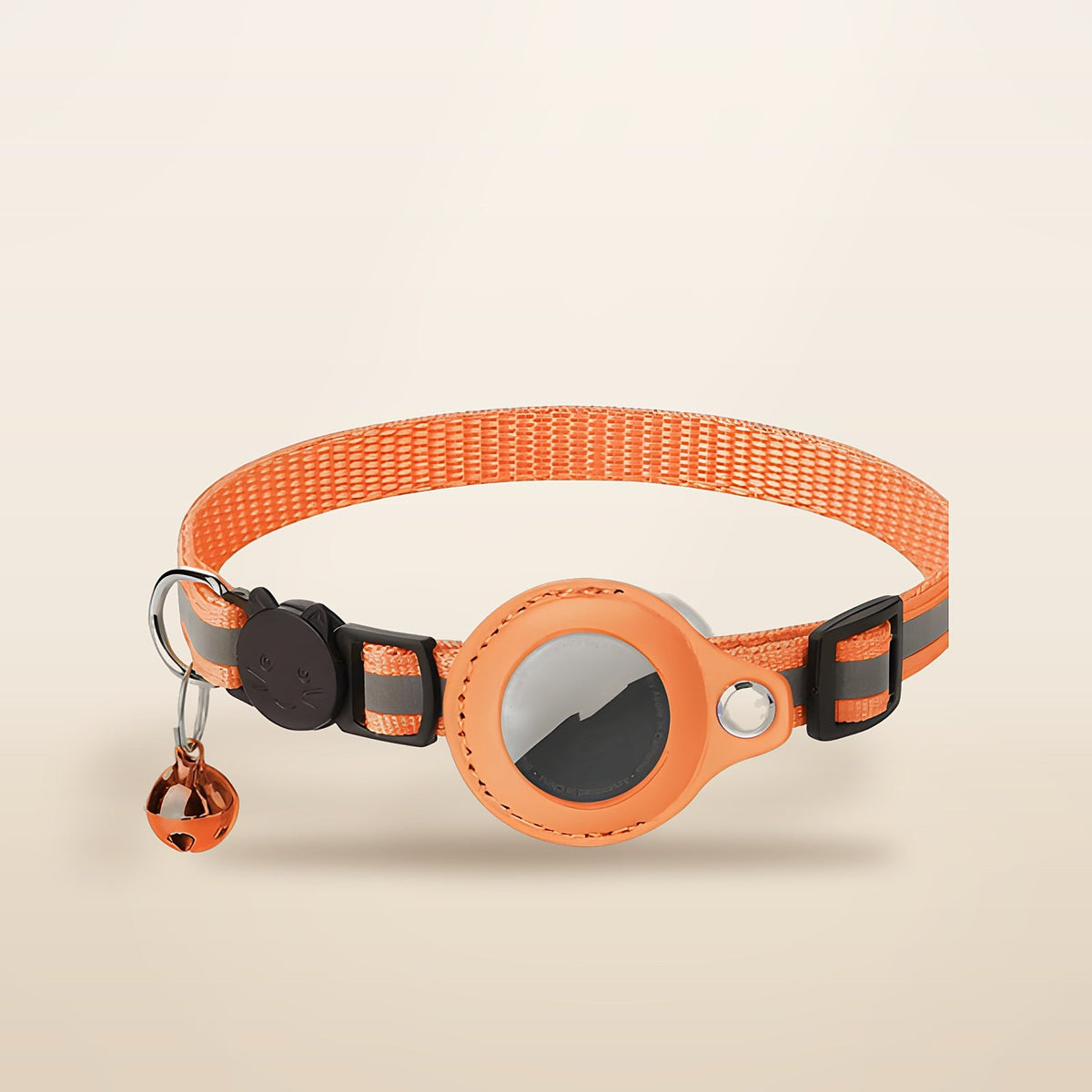
Clip your AirTag into the case, fasten the breakaway buckle and adjust so two fingers fit under the band. Then let them wear it every day, so it is on when it matters.
First days
Getting them used to it
Day 1
A few minutes on, with treats. Then take it off.
Days 2–3
Longer stretches while you are home.
Day 4 onwards
All day, and check the fit every week.
AirTag sold separately. Tracking depends on your AirTag and the Find My network, and is not a live GPS tracker. Keep your microchip details up to date too.