

You clip on the leash, open the door, and within ten seconds your arm is fully extended and your dog is leaning into the collar, coughing, still pulling. You hold back. They pull harder. Twenty minutes later you're both home, both tired, and neither of you enjoyed it. Pulling isn't bad behavior. It's a habit, and habits can change.
In this article
Why dogs pull · Five habits for calmer walks · Why the collar makes it worse · Better gear for training
The problem
Why your dog pulls
01
The world is exciting
Smells, squirrels, other dogs. Everything outside is more interesting than walking at your pace.
02
Pulling works
Every time they pull and you follow, they learn that pulling gets them where they want to go.
03
You walk slower than they do
A relaxed human pace is a slow trot for most dogs. They are always a step ahead.
04
Opposition reflex
When something pulls them back, dogs naturally lean the other way. A tight leash invites more pulling.
What helps
Five habits for calmer walks
Stop when the leash goes tight. Stand still, wait for slack, then walk on. Pulling stops getting results.
Reward the loose leash. A treat or praise every time they walk beside you teaches them where to be.
Let them sniff on purpose. Give a "go sniff" cue at good spots, then move on. They pull less when they know sniffing will come.
Start in a quiet place. Practice on a calm street before you try the busy park.
Change what the leash clips to. A padded harness takes the pull off the neck while you train.
Why the collar makes it worse
When a dog pulls on a collar, all of that force lands on the neck. They cough, you wince, and the tension on the leash makes them lean in even more. A harness spreads the load across the chest, so training sessions feel calmer for both of you.
The setup
A harness made for everyday walks
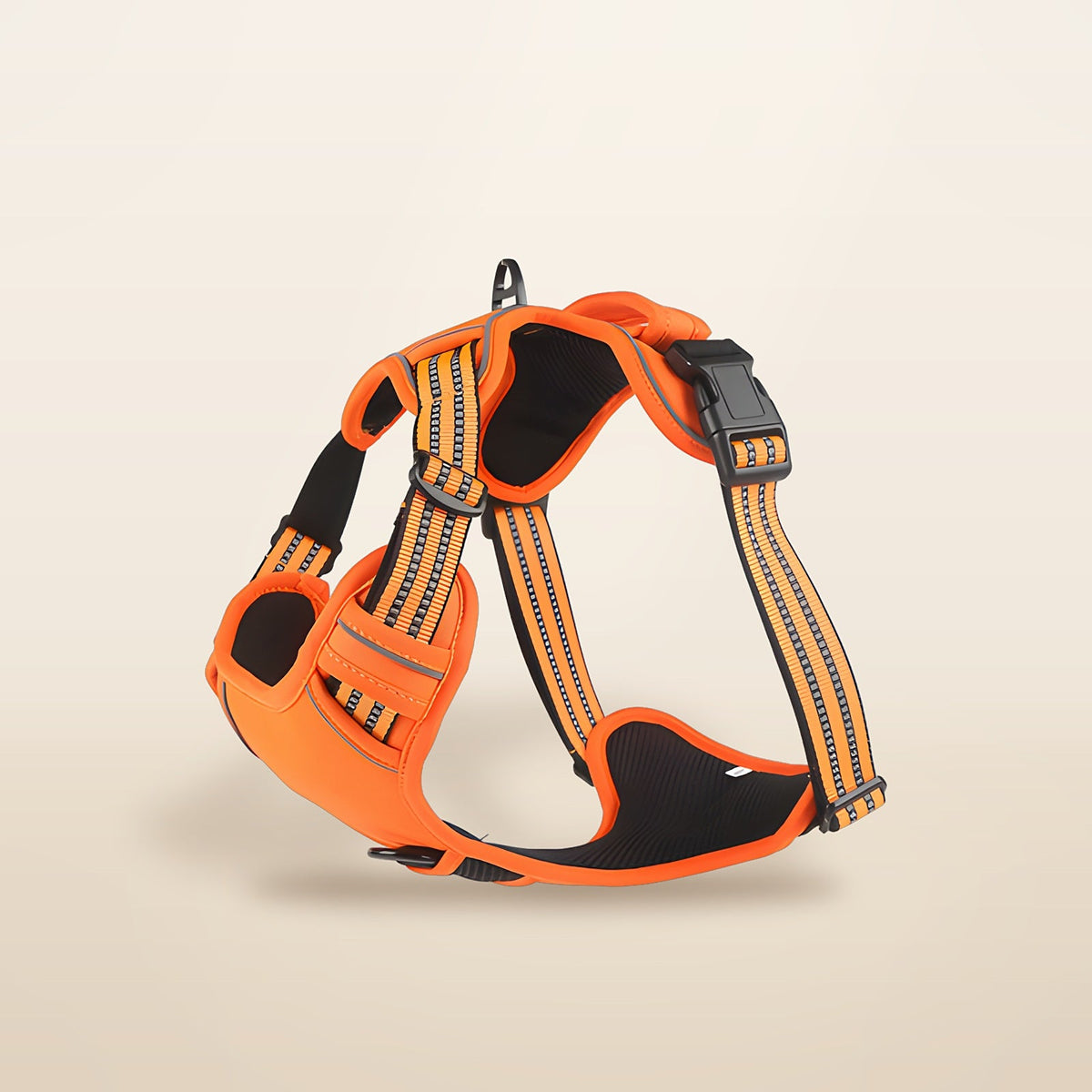
A harness is not a magic fix for pulling. It gives you a comfortable, secure setup while you practice the habits above, and a handle when you need to keep them close.
First week
Getting them used to it
Day 1
Let them sniff it, then put it on indoors for a few minutes with treats.
Days 2–3
Short walks on a quiet street. Stop every time the leash goes tight.
Day 4 onwards
Longer walks, plenty of praise for every loose-leash stretch.
Measure the widest part of the chest before you order, and check the fit before every walk. For strong pulling or reactivity, a local trainer can help.